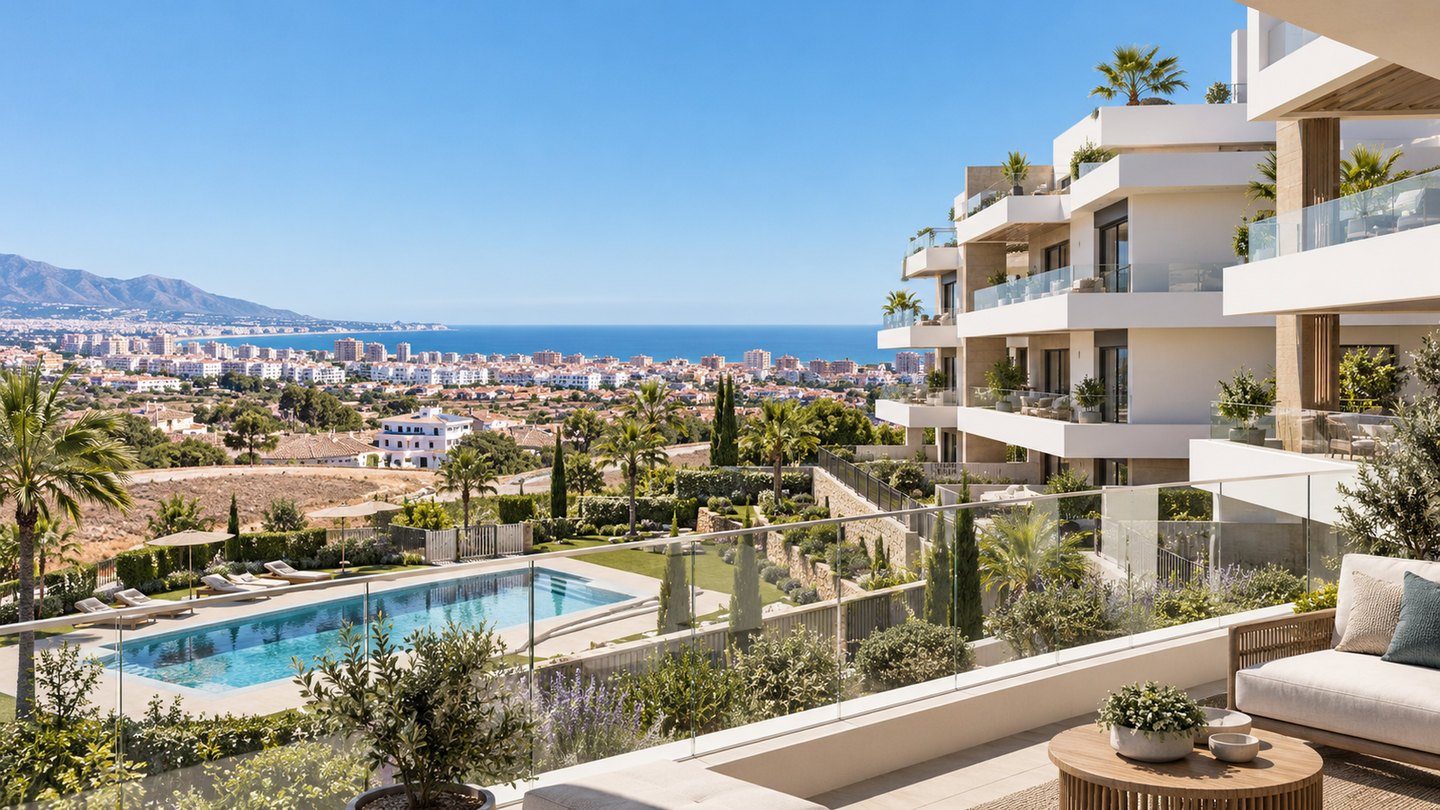
A practical guide to buying new-build property in Fuengirola: specifications, reservation, deposits, taxes, finance and the location. This guide is designed for international buyers considering property in Fuengirola and the Costa del Sol. It is practical information rather than a substitute for independent professional advice.
Start with the decision, not the floor plan
Buying a new-build home starts with a practical question: will this particular property meet your needs at the time you expect to occupy it? Define whether it will be a primary residence, a second home or a property used for occasional stays. Consider whether you need a specific completion date, how much money you can commit during construction and whether the purchase depends on a mortgage or selling another home.
Build two budgets: the advertised property price and the total amount required to complete the transaction. Separately map the dates on which money may be due. A buyer who can afford the eventual purchase price may still struggle with a deposit schedule that arrives before other funds become available.
If you are purchasing from outside Spain, allow time for identity documents, financing, professional representation and the practicalities of signing. These are not reasons to avoid new-build property; they are reasons to plan the transaction in the right order.
Who is selling and what exactly is being sold?
Ask for the identity of the developer and the legal entity that will sign with you. Clarify whether the home is merely planned, under construction or finished. Request the relevant plans, descriptions and documents that identify the exact unit you intend to buy.
A development brochure can help you visualise a project, but it is not a substitute for the documentation that defines the transaction. Confirm the floor, orientation, location within the building, access, neighbouring units and relationship to common areas. A change of floor or orientation may matter far more to your daily life than a marketing photograph.
Do not assume that a parking space, storage room or terrace is included simply because it appears in promotional material. Ask whether each item is included in the price, how it is legally identified and which documents describe it.
Understand surface areas and specifications
When comparing homes, distinguish usable interior space, constructed area, terraces and common-area allocations. The same headline square-metre figure can describe very different living experiences. Ask the seller to explain exactly which measurement is being quoted and request the corresponding plan.
Read the specification document as a practical list of what will be delivered: windows, doors, kitchen equipment, heating and cooling, hot water, flooring, bathrooms and other installations. If it allows equivalent substitutions, ask how equivalence is determined and who decides.
Save dated copies of the plans, specifications and commercial information you receive. If a feature is essential to your decision, request written clarification about whether it forms part of the contractual commitment.
Reservation documents and staged payments
The word ‘reservation’ does not tell you what obligations a document creates. Before paying, identify the parties, the precise property, the amount, the recipient, the payment destination, the deadline for signing a later contract and what happens if either party does not proceed.
Ask to see the proposed contractual sequence before making the first payment. A reservation document and a later private purchase contract may have different consequences. Never assume a deposit is automatically refundable or that a financing contingency exists unless the actual wording supports that conclusion.
For an off-plan purchase, obtain a written payment schedule showing the expected stages and amounts. Make sure you understand what triggers each instalment and how changes to the delivery programme are handled.
Protection of advance payments
Advance payments for homes under construction require particular care. Spanish legislation provides for guarantees of certain advance payments in circumstances covered by the relevant rules. Ask which payments are protected, by which guarantee or insurance arrangement, who provides it and what documentary evidence applies to your specific payments.
Request the relevant bank-account and guarantee information before transferring funds. Keep the signed agreement, payment receipt and proof of transfer together. A general statement that a development is ‘guaranteed’ is not enough to establish the protection applicable to your particular deposit.
Because the precise legal position depends on the transaction and the relevant statutory requirements, have an independent qualified professional review the documents before committing substantial funds.
Taxes, fees and the real acquisition budget
The purchase price is not the whole acquisition cost. A first supply of a new dwelling by a developer is generally subject to VAT; the usual rate for residential property is 10%, subject to legally defined exceptions. The deed may also attract Spanish stamp duty, known as AJD, under the applicable regional rules.
In Andalusia the generally published AJD rate is 1.2%, although reduced rates and particular cases may apply. Rates and reliefs must be checked against the rules in force for the transaction. Notary, registration, professional advice and finance-related expenses should be budgeted separately rather than described as one universal percentage.
Ask for an itemised estimate covering purchase price, taxes, transaction services, any finance costs and a contingency. Confirm who is responsible for each expense under the actual contract and applicable law.
Finance before commitments
If you need a mortgage, speak with lenders or suitably qualified intermediaries before assuming a deposit obligation. A preliminary assessment is not a binding loan approval. A bank may assess income, existing liabilities, the property, the valuation and other criteria before deciding what to offer.
Buyers with income or tax residence outside Spain may need additional evidence, translations or documentation. Plan for the possibility that the amount or timing of finance differs from an early estimate.
Ask your independent adviser to review what happens contractually if the expected finance does not materialise. Do not assume that a contract automatically allows you to withdraw without consequences.
Check the street, not only the development
In Fuengirola, the same neighbourhood name can include flat and steep streets, different access to shops and different levels of reliance on a car. In Los Pacos in particular, test the actual walking route to a supermarket, pharmacy, school or transport connection.
Check parking access, the surrounding buildings, road noise, orientation and any nearby construction. A new home can be attractive on paper while its particular position creates daily inconveniences.
Visit the area at different times. Distinguish amenities already operating from facilities that are only planned or under construction.
Twelve questions to ask before reserving
Who is the developer and who signs with me? Which exact unit am I buying? What surface measurements apply? Which parking or storage units are included? Which plans and specifications are contractually relevant? What is the current planning and construction status?
What document am I signing now? What payments are due and when? How are applicable advance payments protected? How is the delivery date defined and what happens if it changes? Which taxes and costs are additional? What happens if finance is unavailable?
Record the answers in writing and retain the documents. If an answer is incomplete, the sensible next step is clarification, not an irreversible payment.
How to compare two units in the same development
Do not assume that two apartments with the same number of bedrooms offer the same quality of use. Compare the actual internal layout, orientation, position relative to lifts and communal circulation, overlooking, light and any difference in terraces or annexes. A unit on a different floor may have different access, privacy and noise conditions.
Make a comparison sheet with the unit identifier, usable and constructed areas, terrace dimensions, parking and storage details, orientation, specification version and price. Mark each figure with the document from which it came. If the developer uses several surface measurements, ask which one corresponds to the enclosed living area and which includes other elements.
How to read the specification without being an architect
Start with the features that will affect everyday life: heating and cooling, glazing, ventilation, hot water, kitchen equipment, bathroom fittings, doors and flooring. Look for precise descriptions rather than generic words such as ‘premium’ or ‘high quality’. If an item can be substituted, request an explanation of the permitted substitution criteria.
Consider what is not specified. A rendering may show furniture, decorative lighting or appliances that are not included. Make a separate list of anything you assumed would be delivered and confirm it in writing. This is particularly important when comparing a development with a finished resale property where the buyer can inspect existing fittings.
Build a document folder from the beginning
Organise the purchase into eight sections: sales information; dated plans and specifications; reservation and contracts; payment schedule and receipts; advance-payment guarantees where applicable; formally accepted changes; correspondence; and completion and handover documents. This structure is useful even if everything proceeds smoothly.
Keep requests and accepted changes distinct. A buyer asking for a different finish is not evidence that the developer agreed to provide it. Save the written acceptance, any revised price and the version of the plan to which the change relates.
Planning for handover
Before completion, ask what documentation and practical arrangements will be provided, how keys and access devices are delivered, and what process applies to reporting issues. Compare the actual unit with the agreed specification and keep a dated record of anything requiring clarification.
Find out when community charges, utilities and other ongoing obligations are expected to begin. A complete budget should not stop at the purchase deed: the first year of ownership may include furniture, services, insurance and maintenance even if the home is used only part of the year.
Keep a written decision record
For each property, write down the checks you have completed, the source of each answer, what remains uncertain and the next action required. Confirm changing information through the relevant official or professional source before relying on it.
Editorial guide for general information. Check current official rules and obtain independent legal, financial or educational advice where appropriate.
Controller: Pedruscos, S.L. With your consent, we will use your email address to send you our property guides and updates. You can unsubscribe at any time. Read our Privacy Policy.